
Montenegro Lines bans EVs, hybrids from vessels over fire and explosion concerns
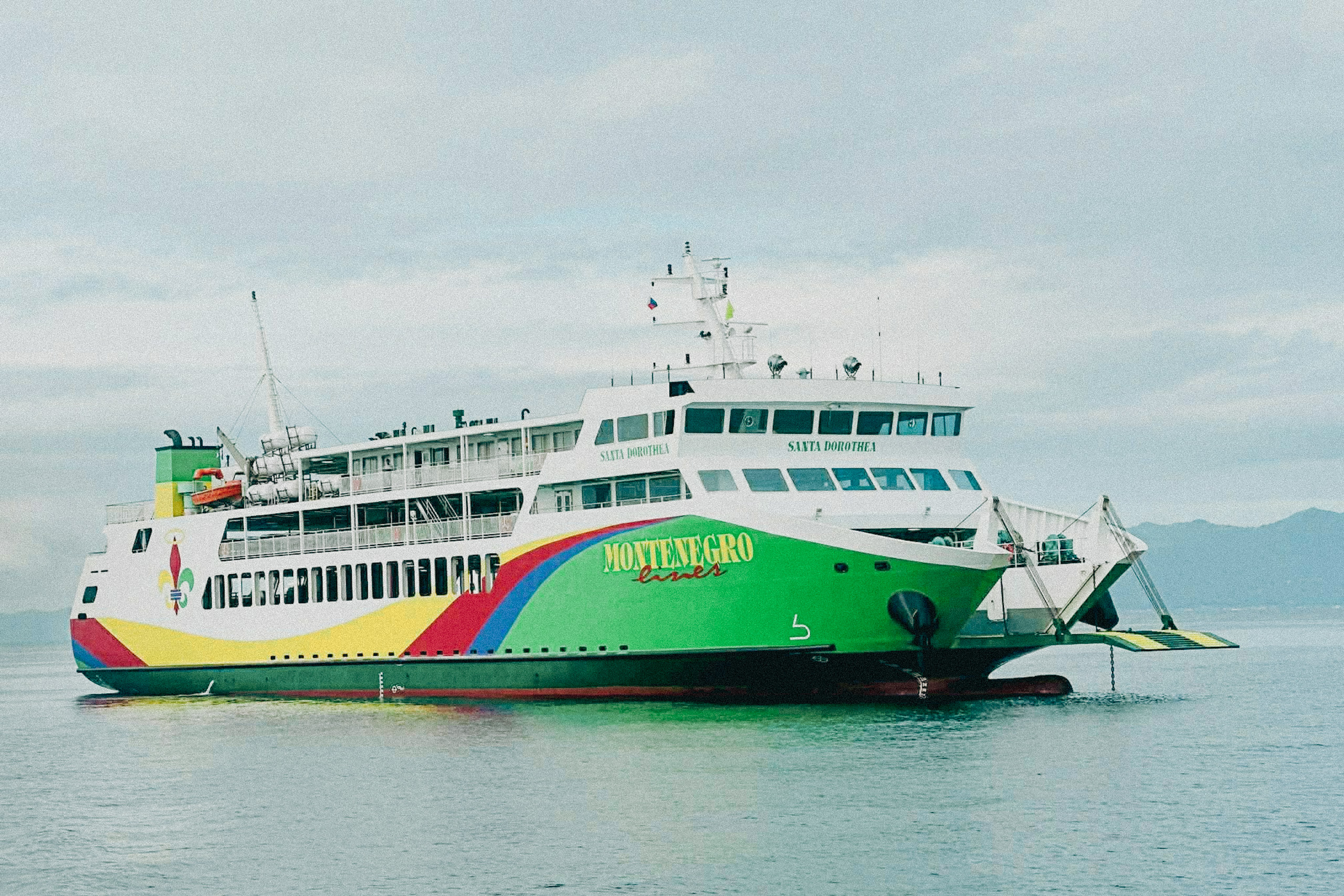
Montenegro Lines bans EVs, hybrids from vessels over fire and explosion concerns
Montenegro Lines orders immediate EV, hybrid vehicle ban aboard its vessels

Montenegro Shipping Lines has ordered an immediate ban on electric vehicles (EVs) and hybrid electric vehicles (HEVs) aboard its vessels, citing concerns over potential fires, explosions, thermal runaway, and other battery-related hazards.
In a memorandum issued to vessel masters, Montenegro Lines instructed them not to allow any EV or HEV to be boarded or carried on company vessels, either as a passenger vehicle or as cargo.
The directive comes as authorities continue investigating the September 9 fire aboard MV June Aster, a ferry operated by Atienza Inter-Island Ferries that was traveling from Manila to Coron, Palawan. The vessel was carrying five motorcycles, an electric vehicle, a forklift, a pickup truck, and other cargo when the fire broke out. Survivors reported hearing explosions, but authorities have yet to determine what caused the blaze.
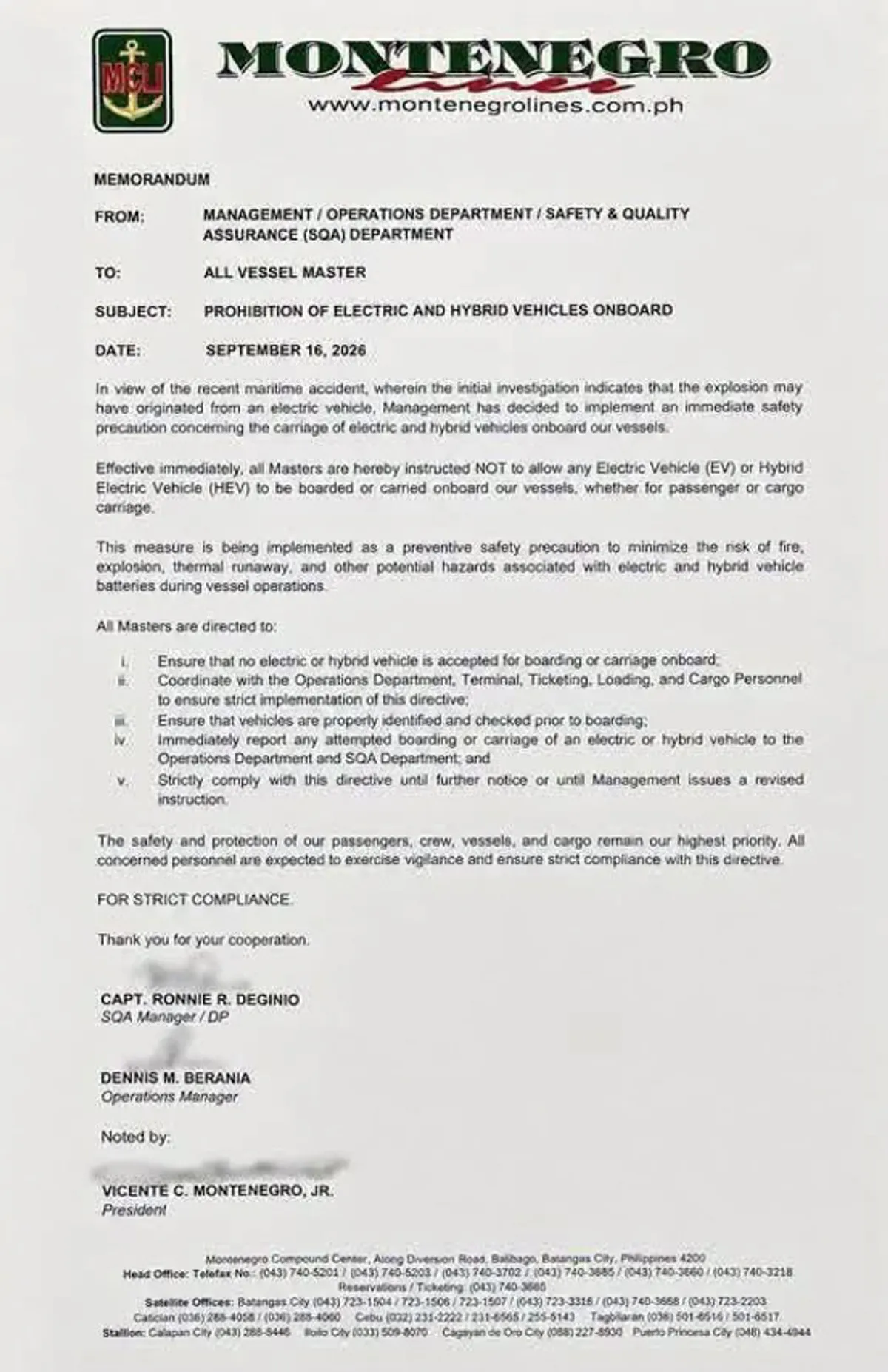
Montenegro Lines described its EV and HEV ban as a preventive safety measure aimed at reducing the risks associated with vehicle batteries during vessel operations.
Under the directive, vessel masters are required to coordinate with operations, terminal, ticketing, loading, and cargo personnel to ensure EVs and HEVs are not accepted for transport. Vehicles must also be properly identified and checked before boarding.
Any attempt to bring an EV or HEV onboard must be reported immediately to the company’s Operations and Safety and Quality Assurance departments.
The restriction covers both passenger and cargo transport. The memorandum does not specify how long the ban will remain in effect or if Montenegro Lines will review the policy after authorities complete their investigation into the ferry fire.
Montenegro Shipping Lines operates passenger, cargo, roll-on/roll-off (Ro-Ro) and fastcraft services across the Philippines. Its network includes routes connecting Batangas with Calapan, Abra de Ilog, Puerto Galera and Odiongan, as well as Lucena with Marinduque and Romblon.
The company also operates services connecting Masbate with Sorsogon and Ticao Island, Surigao with Southern Leyte, Siargao and Dinagat Islands, and routes serving areas in Palawan, Iloilo, Bacolod, Dumaguete and Zamboanga.
Established in 1978, Montenegro Shipping Lines initially operated between Batangas City and Mindoro. The company says it now has a fleet of 59 vessels, fastcrafts and passenger vessels, serving 34 ports.
DOE recognizes Montenegro Lines’ safety concerns
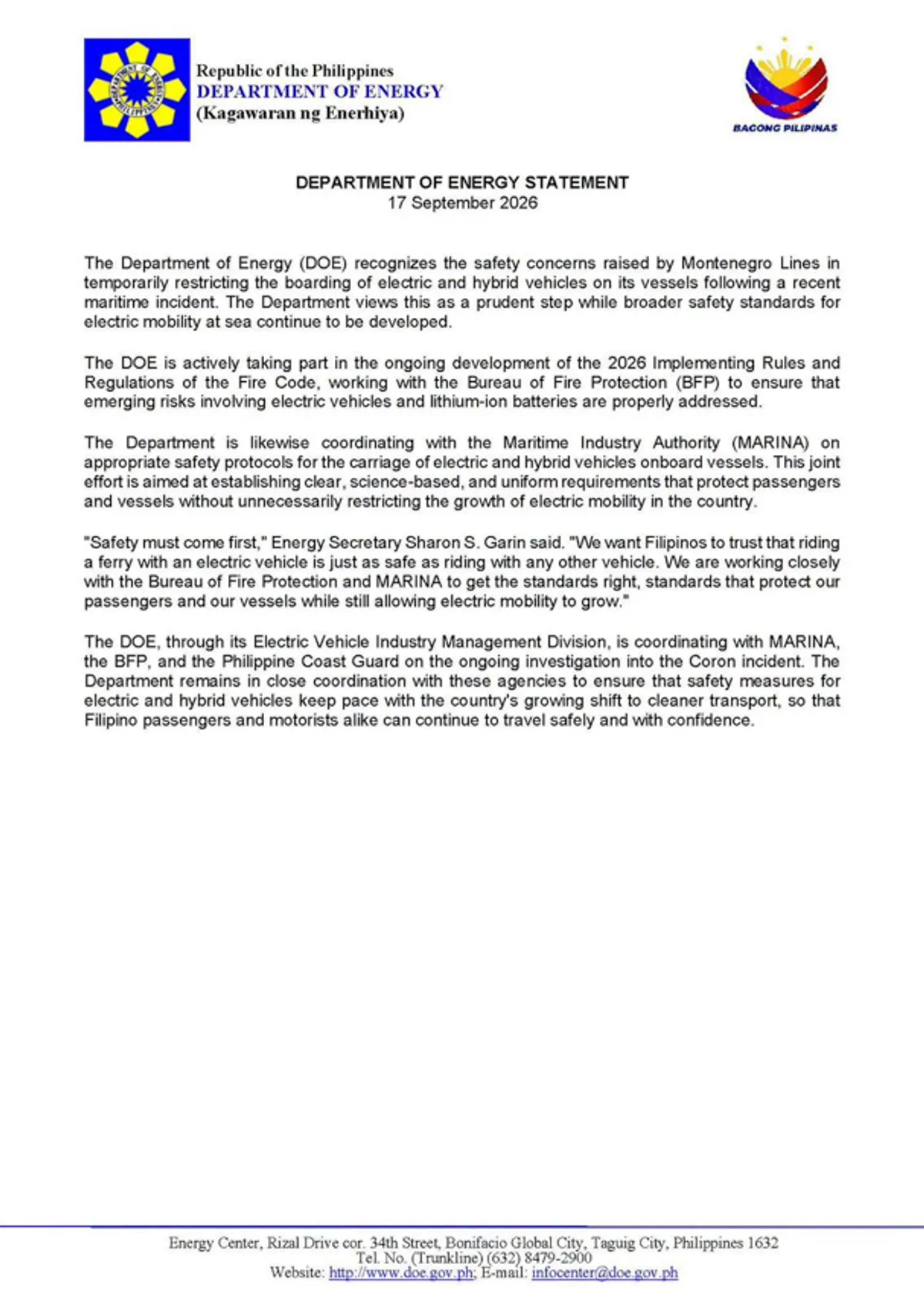
The Department of Energy (DOE) issued a statement saying that it recognizes Montenegro Shipping Lines’ safety concerns, describing it as a prudent measure while broader standards for electric mobility at sea are being developed.
The DOE said it is working with the Bureau of Fire Protection (BFP) on the 2026 Implementing Rules and Regulations of the Fire Code, including provisions addressing emerging risks associated with electric vehicles and lithium-ion batteries. The department is also coordinating with the Maritime Industry Authority (MARINA) and the Philippine Coast Guard (PCG) on the ongoing investigation into the Coron incident.
Energy Secretary, Sharon Garin, said the government is working to establish clear, science-based and uniform safety requirements without unnecessarily restricting the growth of electric mobility.
“Safety must come first,” Garin said, adding that coordination with the BFP and maritime authorities is aimed at protecting passengers and vessels while building public confidence in electric vehicles.
Related Posts
Toyota Land Cruiser 300 HEV now comes in GR Sport; will PH get it?
Toyota Land Cruiser 300 and HEV models get new creature comforts in latest update
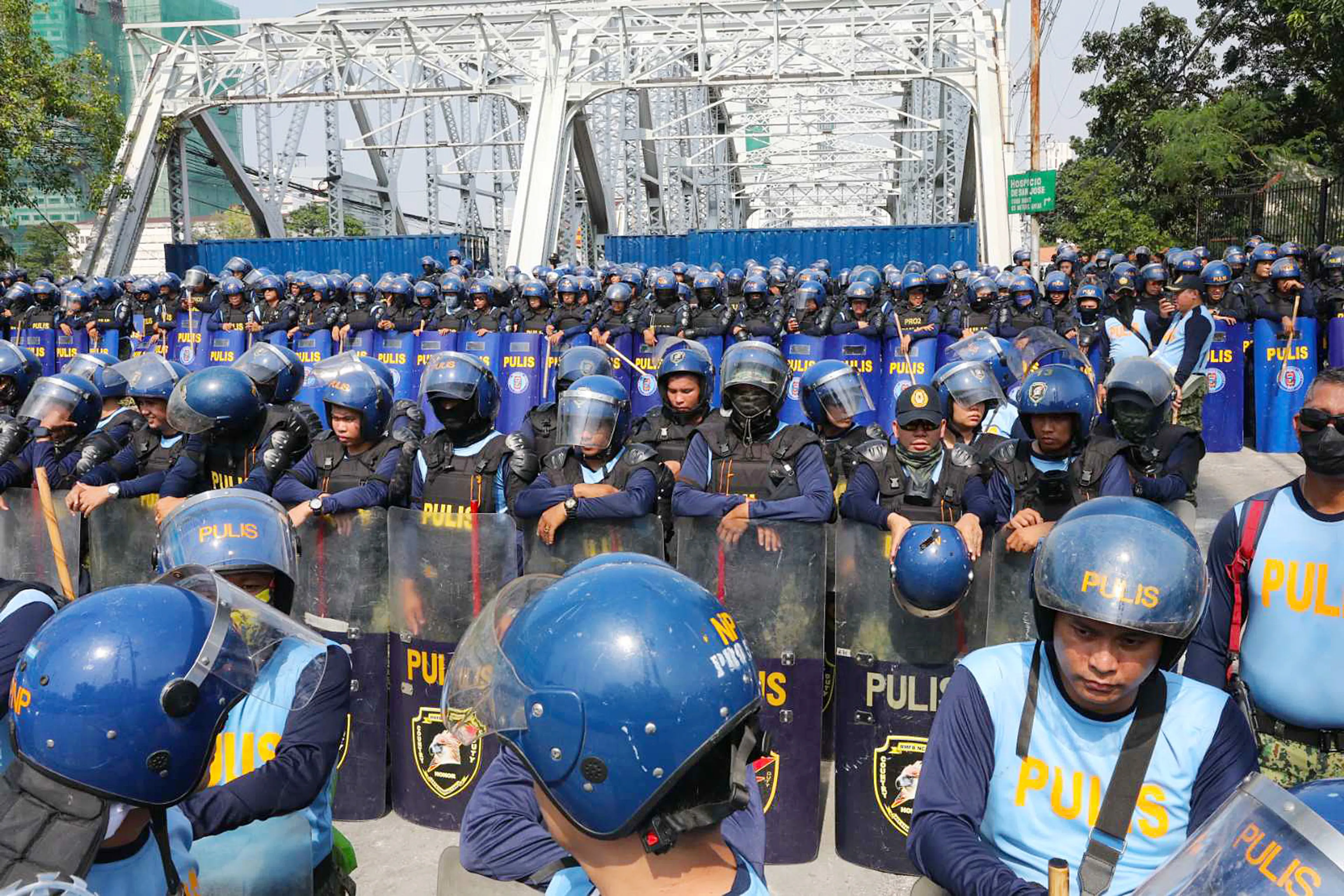
Manila Police announces road closures on 54th anniversary of martial law
Road closures will begin at 12:01 AM on September 21, 2026
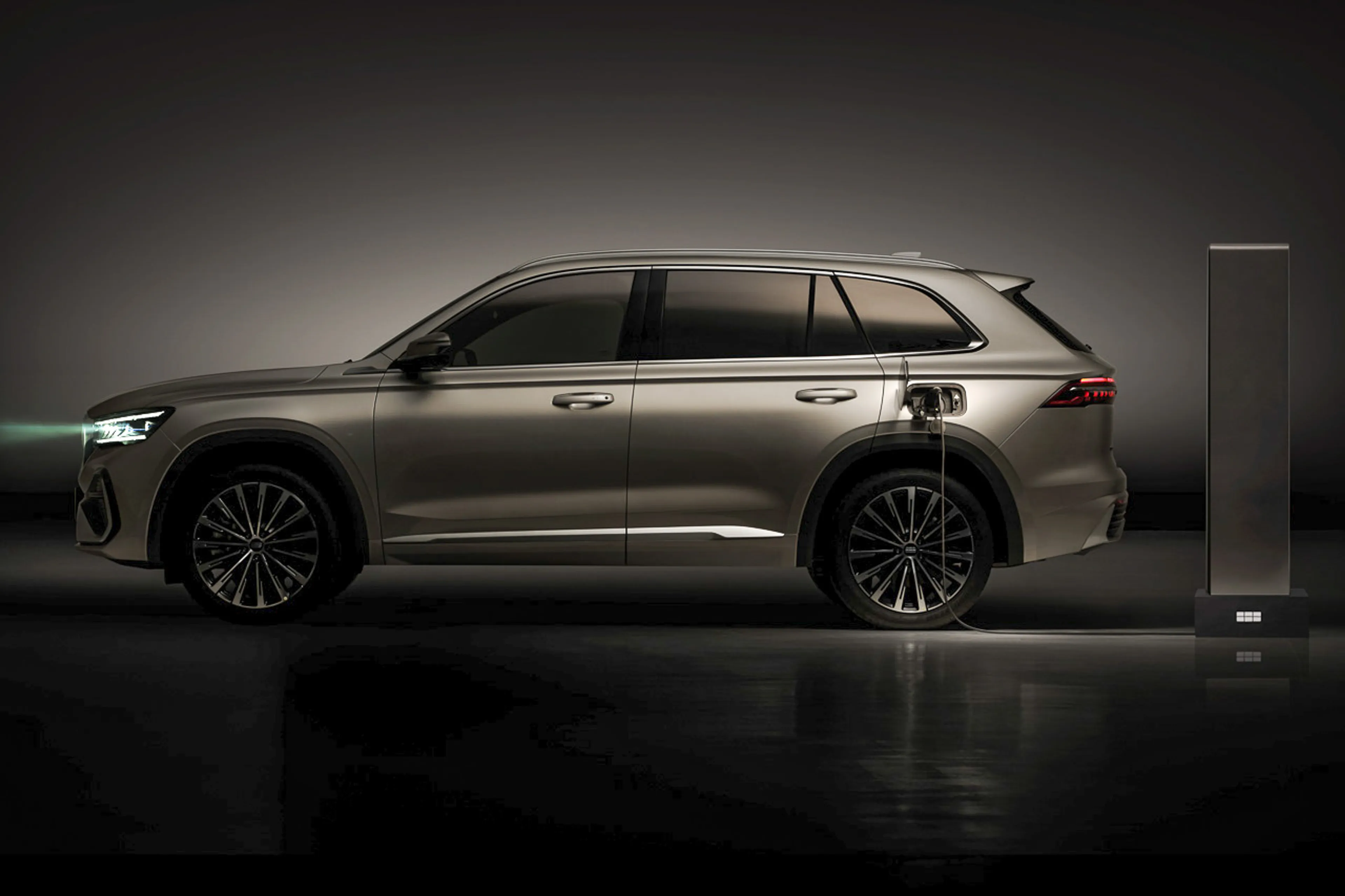
Geely Monjaro EM-i PHEV gets LTO approval
According to LTO documents, the Geely Monjaro EM-i has an EV range of up to 116 km
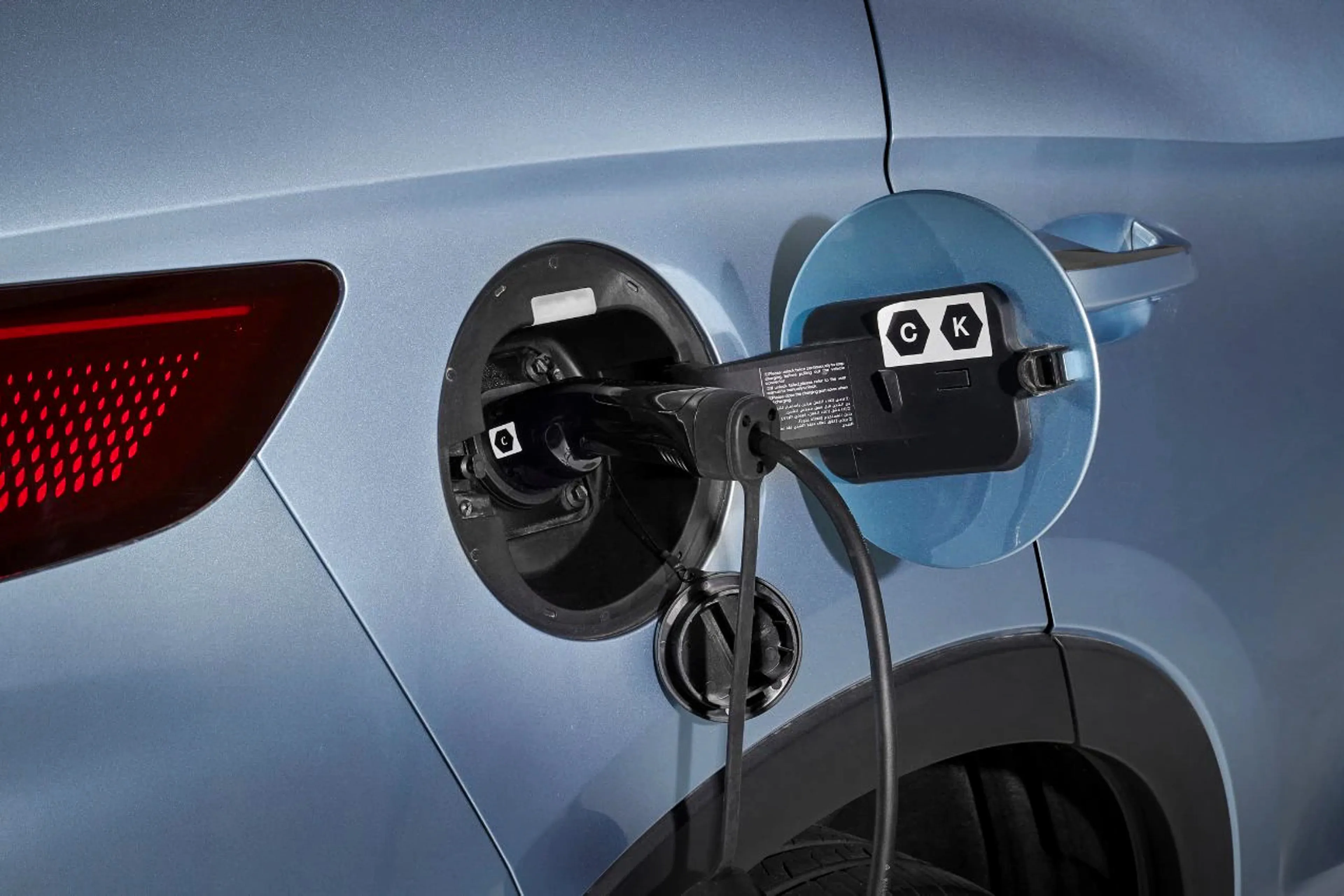
LTFRB opens 7,500 TNVS slots for NCR exclusive to BEV, PHEV
7,500 new TNVS slots are exclusive to PHEV and BEV; HEVs not included
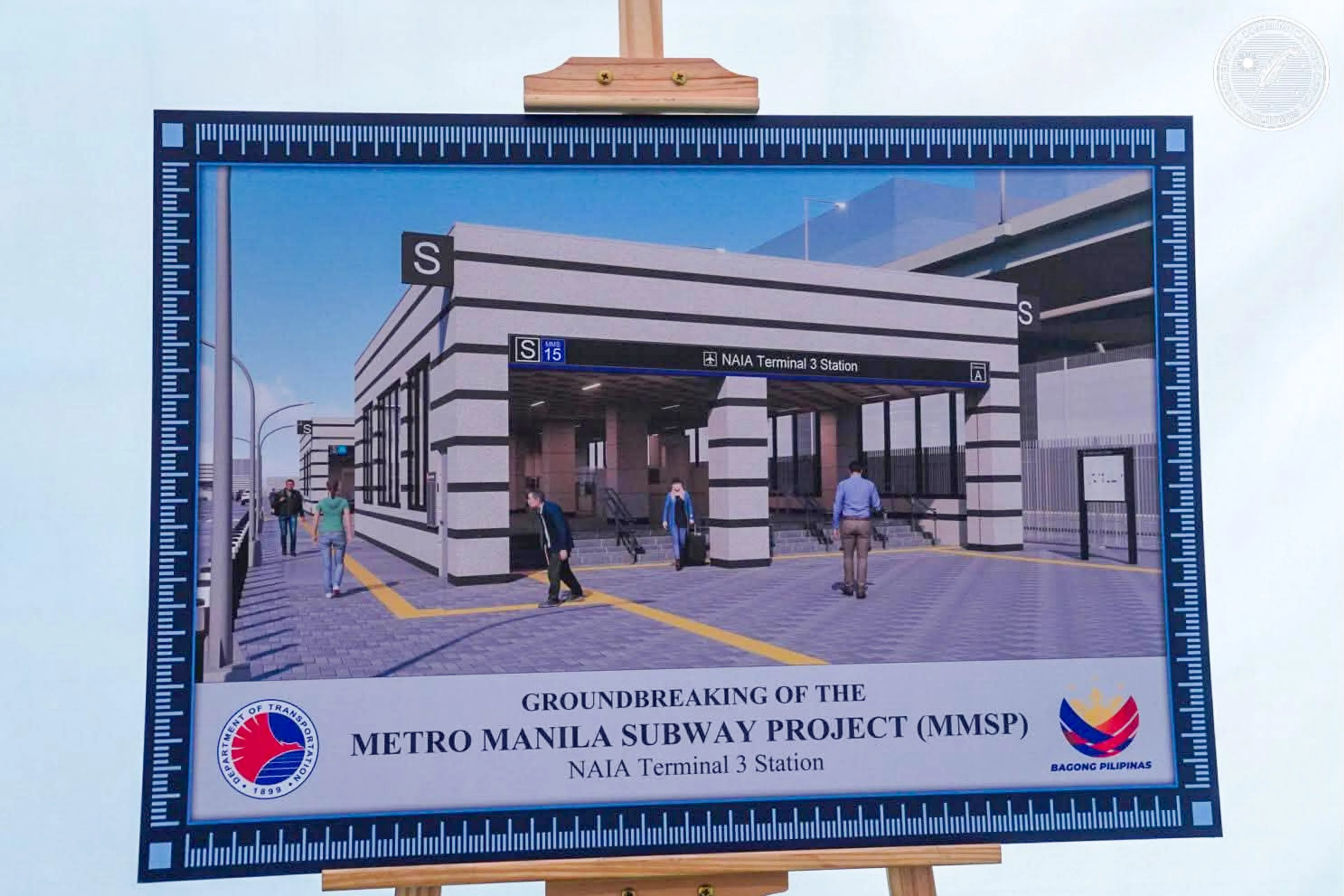
Construction of NAIA Subway Station breaks ground; open by 2031
Total approved cost of the entire Metro Manila Subway system: PHP 488.48 billion
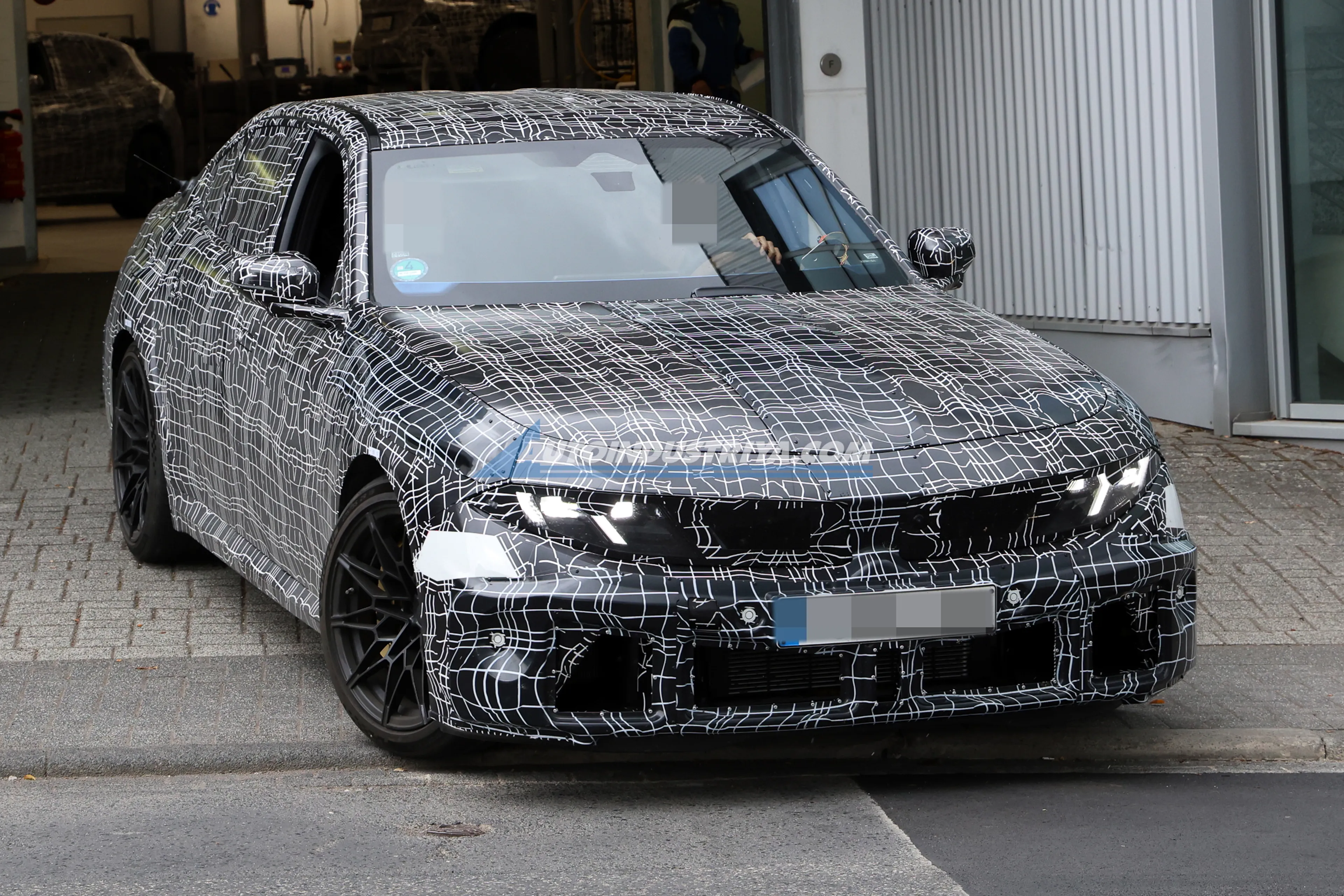
Next-generation ICE BMW M3 spied hard at work on the Nürburgring
Exclusive spy photos capture the next-generation gasoline-powered BMW M3 testing at the Nürburgring with reduced camouflage, showcasing a redesigned front fascia, muscular fenders, and signature quad exhausts