
Bus operators urge gov’t to lift fare hike suspension amid rising fuel costs
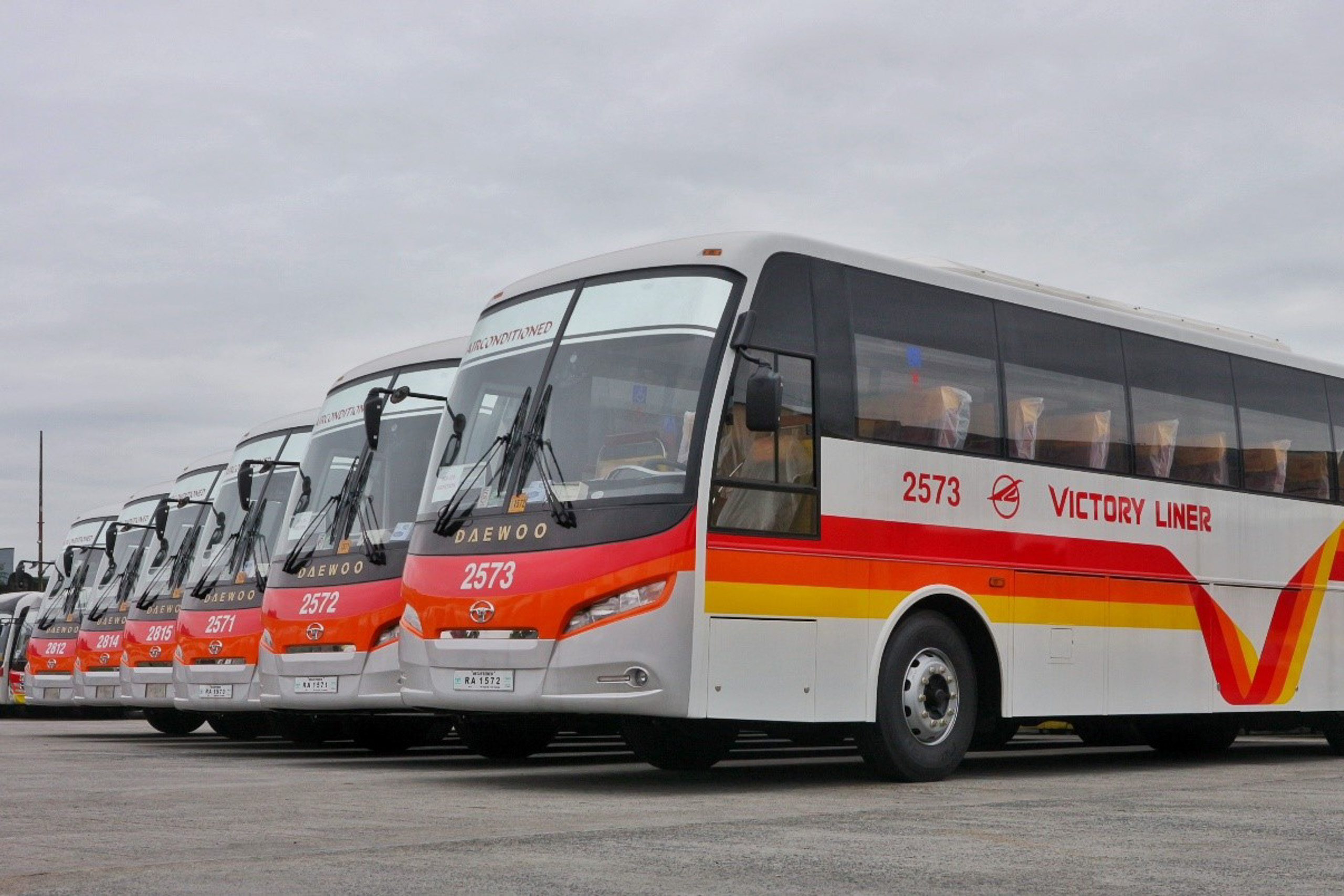
Bus operators urge gov’t to lift fare hike suspension amid rising fuel costs
Bus operators calling for fare hike to keep operations running

Victory Liner and several bus industry organizations are urging the government to reconsider the suspension of approved fare adjustments as rising fuel and operating costs continue to put pressure on the provincial and city bus sectors.
In a public appeal, Victory Liner, the Southern Luzon Bus Operators Association (SOLUBOA), the Nagkakaisang Samahan ng Nangangasiwa ng Panlalawigang Bus sa Pilipinas Inc. (NSNP-BPI), and the Mega Manila Consortium Corporation (MMCC) called on President Ferdinand Marcos Jr., the Congress, the Department of Transportation (DOTr), Department of Finance, Department of Energy, and the Land Transportation Franchising and Regulatory Board (LTFRB) to act on the suspended fare adjustments.
The groups pointed to fuel as one of their biggest operating expenses, claiming that it now accounts for around 45 to 60 percent of operating costs. They said current regulated fares have not kept pace with the cost of providing what they described as safe and reliable bus services.
The appeal comes after the LTFRB approved provisional fare increases for provincial buses effective March 14, 2026. The approved adjustments included an additional PHP 0.35 per kilometer for air-conditioned, deluxe and super deluxe provincial buses, PHP 0.45 per kilometer for luxury buses, and a PHP 1 increase in the base fare plus PHP 0.30 per succeeding kilometer for ordinary provincial buses.
However, President Marcos ordered the suspension of the planned fare increases on March 18 as the government sought to shield commuters from the impact of soaring fuel prices. The DOTr subsequently clarified that the suspension covered recent fare increases for city and provincial buses, among other land-based public transport modes.
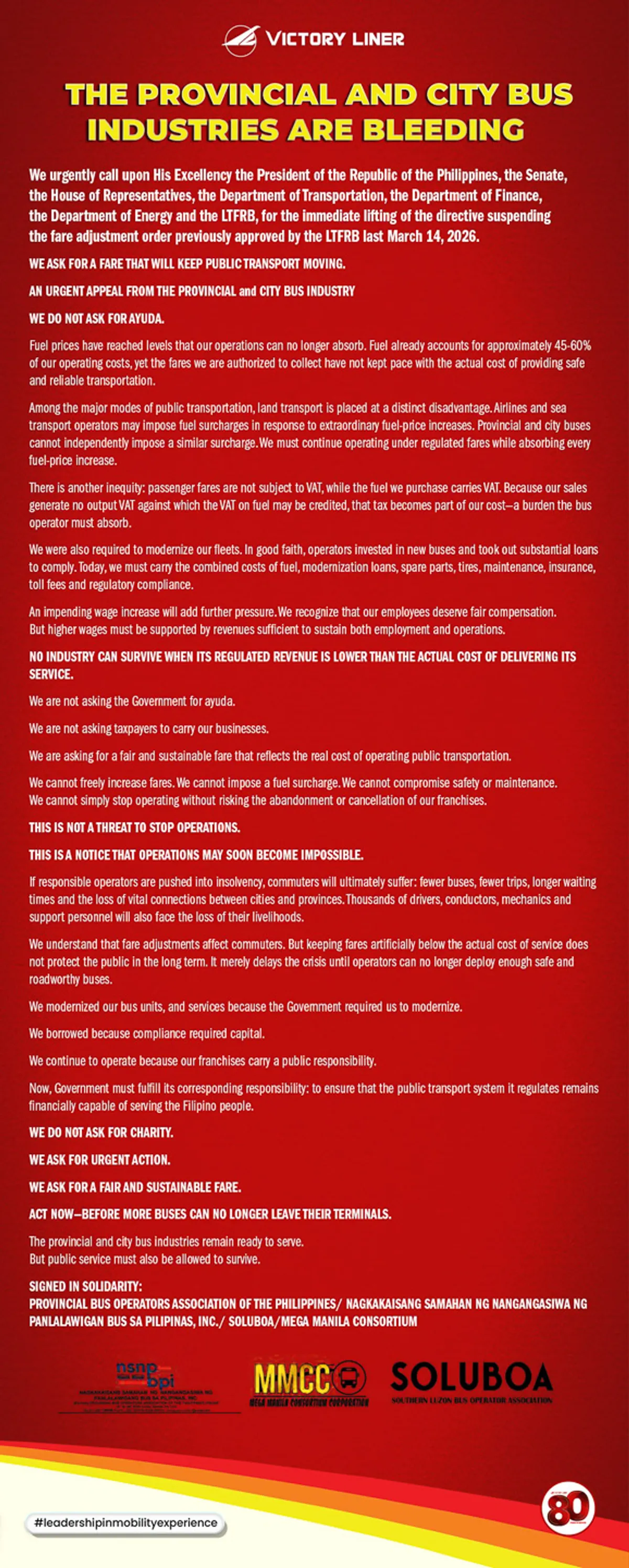
The bus groups said operators are also dealing with expenses related to fleet modernization, loans, spare parts, tires, maintenance, insurance, toll fees and regulatory compliance. They added that higher wages could add another layer of pressure on already strained operating revenues.
The industry has previously raised similar concerns. In March, bus operator groups warned that continued fuel price increases could force operators to reduce trips and potentially downsize their workforce. By July, the LTFRB was reviewing pending fare hike petitions amid higher petroleum prices, while also considering whether buses should receive fuel subsidies or fare adjustments.
The latest appeal comes as the government again considers a public transport fare adjustment. The LTFRB said on September 20 that it was finalizing its recommendation for a possible fare increase amid continued fuel price volatility, with the proposal expected to be submitted to Transportation Secretary Giovanni Lopez for approval by October.
In their statement, the bus operators emphasized that they are not asking for government aid or for taxpayers to shoulder their operating costs. Instead, they are asking for fares that they say reflect the actual cost of running public transportation.
The groups warned that if operating costs continue to outpace regulated revenues, operators could be forced to reduce trips or eventually stop operating certain services. They said this could translate into fewer buses, longer waiting times and disruptions to connections between cities and provinces.
The appeal concludes with a call for "urgent action" and a "fair and sustainable fare," saying the provincial and city bus industries remain ready to serve, but that public transport operators must also be allowed to remain financially viable.
Related Posts
Automotive trade between PH, EU set to benefit from new FTA
Philippines and European Union reach substantial agreement on a free trade deal

Toyota GR Yaris Rally1 is now the winningest car in WRC history
The GR Yaris Rally1 has now amassed 47 WRC rally victories, edging past the legendary Lancia Delta Group A, which recorded 46 wins during its dominant era in the championship.
Volkswagen restructure could slash another 4,100 Porsche jobs
Porsche could face another 4,100 job cuts as parent company Volkswagen pushes ahead with its massive restructuring plan, according to German business daily Handelsblatt.
Toyota PH announces Top 20 finalists of 2026 TGR Esports GT Championship
Toyota Motor PH names the 20 players participating in 2026 TGR Esports GT Championship National Finals
Vingroup jumps 477 spots to No. 340 in TIME World’s Best Companies 2026
The Vietnamese conglomerate improved across key ranking measures.
Kia EV3 debuts with over 500 km of range, intro price of PHP 1.868M
After launching the EV9 and EV5, Kia Philippines reveals the EV3 as its smallest EV yet